If you have a small area of localised fat around your waist, you may have come across Aqualyx as an injectable treatment used for localised fat reduction.
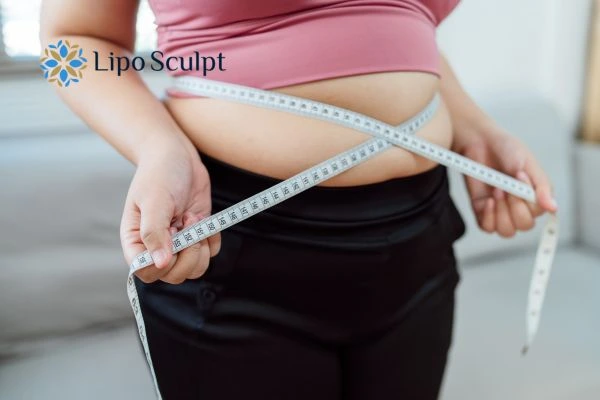
Often described as a “muffin top” or “love handle”, this area can be frustrating because it may remain noticeable even when your overall weight is relatively stable.
Aqualyx is designed for localised fat reduction rather than general weight loss. But that distinction is important. It is not a treatment for obesity, and it cannot reshape the entire waist or guarantee a particular result.
If you are considering treatment, the most useful question is not simply “Does Aqualyx dissolve fat?” It is whether the treatment is appropriate for your particular area, amount of fat, skin quality and expectations.
What is a muffin top?
“Muffin top” is an informal term for the pocket of soft tissue that can appear around the sides of the waist, sometimes extending towards the lower back.
The appearance can vary considerably between people. What looks like a fat pocket in one person may partly involve loose skin, changes in body weight, muscle shape or the natural distribution of subcutaneous fat.
That is one reason an assessment matters before deciding on treatment.
Aqualyx may be considered for selected areas of localised subcutaneous fat following an appropriate assessment. It isn’t a weight-loss treatment and isn’t intended for removing large amounts of body fat. Read More: Melt Away Stubborn Belly Fat with Aqualyx Injections
How does Aqualyx work?
Aqualyx is an injectable product used for the treatment of selected areas of localised subcutaneous fat.
Aqualyx is intended to act locally in the treated area, with any visible changes developing gradually rather than immediately.
It is important not to oversimplify this process as “melting fat away”. The injection does not simply liquefy a lump of fat that immediately disappears. The treated tissue undergoes a biological response, and visible changes develop gradually.
Research on injectable deoxycholic acid has reported reductions in localised fat, with stronger evidence available for some treatment areas, particularly submental fat. However, results can vary depending on where the treatment is carried out, so evidence from one area of the body shouldn’t be taken as a guarantee of the same results elsewhere. Also Check out: Does Skin Sag After Fat Dissolving Injections?
Can Aqualyx reduce a muffin top?
It may be considered when the problem is a relatively small, localised pocket of subcutaneous fat.
However, suitability cannot be determined from a photograph or the size of your clothing alone.
During a Witney consultation, the practitioner should consider factors such as:
- where the fat is located
- how much tissue is present
- the condition and elasticity of the skin
- whether the fullness is predominantly fat
- your medical history
- previous treatments
- what you realistically want to achieve
Aqualyx is therefore better thought of as a contouring treatment for selected areas, rather than a weight-loss treatment.
If the main concern is significant excess fat, substantial loose skin or a larger change in body shape, another treatment may be more appropriate.
Who might be suitable?
A person with a relatively small, localised area of pinchable fat may be considered for treatment following an appropriate assessment.
An assessment can help determine whether the area is predominantly localised fat and whether treatment is appropriate; there is no single body weight that determines suitability.
A Witney consultation should also establish whether your expectations are realistic.
For example, if you are hoping to lose several clothing sizes, dramatically change your waistline or treat widespread excess fat, an injectable treatment may not be the right option.
When might Aqualyx not be appropriate?
Not every person with a muffin top is a suitable candidate.
Treatment may need to be avoided, postponed or discussed with an appropriate healthcare professional where there are relevant medical conditions, skin problems, infection or inflammation affecting the proposed treatment area, pregnancy or breastfeeding, allergies or other factors identified during the medical assessment.
The exact contraindications and precautions should always be checked against the product information and the individual’s medical history rather than relying on a generic online checklist.
You should also tell the practitioner about medicines and supplements you take, previous cosmetic procedures and any history that could affect healing or bruising.

What happens during treatment?
A proper treatment pathway should begin with a consultation rather than an assumption that everyone requesting Aqualyx should receive it.
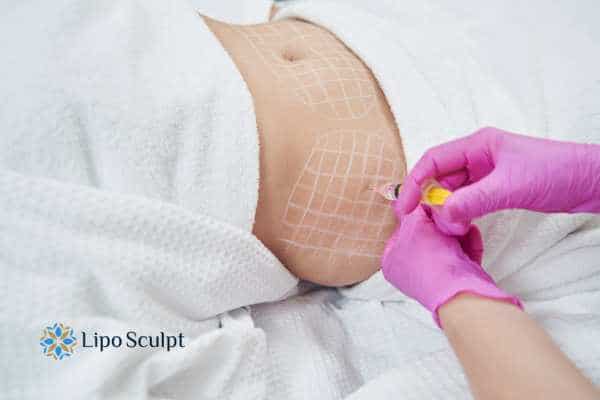
The treatment area is assessed and discussed, including what can realistically be achieved. If treatment is considered appropriate, the area can then be prepared and the injections administered into the intended fatty tissue.
The number of injections and the amount used should be determined by the treatment plan rather than a standard formula advertised online.
The injections themselves may cause temporary discomfort. Temporary swelling, tenderness, redness and bruising can occur following Aqualyx treatment.
Is there any downtime?
Unlike liposuction, Aqualyx treatment does not involve the surgical incisions used for liposuction.
That does not mean there is no recovery period.
The treated area can become swollen, sore or bruised. The extent and duration vary between individuals and depend on the area treated and the treatment itself.
You should therefore avoid planning treatment immediately before an important event without discussing the likely recovery period with your practitioner. See Here: Does Fat Freezing at Home Work? DIY Devices vs Professional Cryolipolysis
Do not assume that being able to return to normal activities means the treated area will immediately look normal.
Are there risks?
Like any procedure involving injections, Aqualyx is not risk-free.
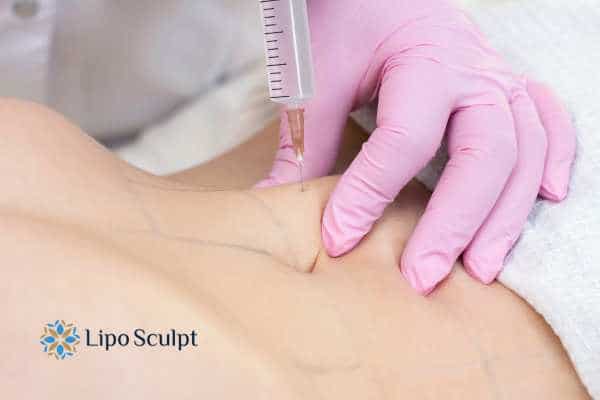
Published research on injectable deoxycholic acid has reported local reactions such as pain, swelling, redness, bruising and numbness. More serious complications have also been reported, although they are uncommon.
The risk is one reason practitioner knowledge of anatomy, appropriate injection technique, product handling and complication management matters.
Appropriate practitioner training, safe treatment technique and effective management of complications are important considerations when choosing a cosmetic treatment provider.
If you develop severe or worsening pain, significant skin changes, signs of infection or another reaction that concerns you after treatment, contact your practitioner promptly and seek appropriate medical advice.
When will you see results?
Aqualyx does not produce an instant change in body shape.
The treated area needs time to settle, so any visible change should be assessed after the initial post-treatment reactions have subsided.
The final appearance can therefore take time to assess, and swelling immediately after treatment can make the area look temporarily worse before it improves.
Some people may require more than one treatment session. The number should be based on your response and the assessment of the area rather than a promise that everyone will need a fixed number.
What Aqualyx cannot do
It is worth being clear about the limitations.
Aqualyx is not:
- a treatment for general weight loss
- It is not intended to replace healthy lifestyle habits or to provide general weight reduction.
- a guaranteed way to achieve a flat stomach or smaller waist
- suitable for every type of abdominal or waist fullness
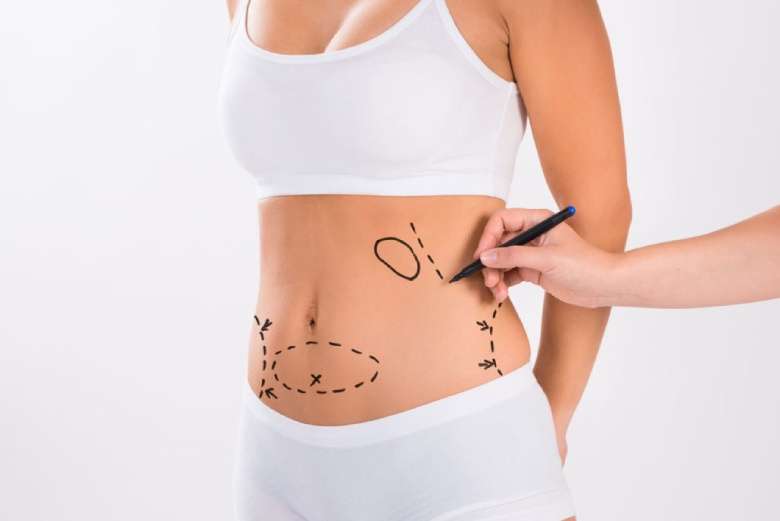
- a substitute for surgery where a substantial amount of tissue needs removing
It may also be less suitable where loose skin is a major part of the concern. Removing or reducing fat does not automatically tighten significant excess skin.
This is why a good consultation should include an honest discussion about what the treatment can and cannot change Witney.
What are the alternatives?
Aqualyx is only one approach to localised body contouring.
Depending on your anatomy and goals, alternatives may include cryolipolysis, other non-surgical body-contouring treatments or, where a much larger reduction is required, surgical liposuction.
Each has different mechanisms, benefits, limitations, costs and risks.
The right choice should be based on the problem being treated rather than choosing the treatment with the most appealing advertisement.
Questions to ask before having Aqualyx
Before proceeding, consider asking:
- Is the fullness actually caused by localised fat?
- Am I suitable for this treatment?
- What improvement is realistically possible in my case?
- How many sessions might I need, and why?
- What side effects should I expect?
- Who will perform the injections and what training do they have?
- What happens if I develop a complication?
- What alternatives would you recommend if Aqualyx is not appropriate?
A practitioner who is prepared to explain why a treatment may not be suitable can be more reassuring than someone who simply promises a result.
The bottom line
Aqualyx may be an option for selected people who have a relatively small, localised pocket of subcutaneous fat around the waist.
But treating a “muffin top” is not a one-size-fits-all approach. The visible fullness may have several contributing factors, and injections are not a solution for general weight loss or significant excess skin.
The most sensible starting point is an individual assessment, followed by a clear explanation of expected results, potential risks, alternatives, and likely treatment requirements.
For Lipo Sculpt, the aim should be to help you decide whether Aqualyx is appropriate for your concern — not to suggest that every muffin top needs treating.

Frequently asked questions
Q: I have a small area of localised fat around my waist — could Aqualyx be suitable?
Aqualyx may be considered for suitable people with small, localised pockets of subcutaneous fat. A consultation Witney is needed to determine whether the area is primarily fat and whether the expected improvement is realistic.
Q: How can I tell whether the fullness around my waist is actually excess fat or whether loose skin is contributing to the appearance of my muffin top?
This can be difficult to judge yourself because fat, loose skin and natural body shape can contribute to the appearance. A professional assessment can help identify what is actually causing the fullness before treatment is recommended.
Q: If I have a small amount of localised fat around my waist, could Aqualyx be one of the treatment options considered?
Aqualyx is intended for localised areas rather than general weight reduction, so it may be considered where the concern is relatively small and well-defined. The most suitable option depends on your anatomy, goals and the amount of tissue involved.
Q: How many Aqualyx sessions might I need before I can properly judge whether my muffin top has reduced?
There is no fixed number of sessions that guarantees a particular result. The area needs time to settle after treatment, and your practitioner should review your response before deciding whether further treatment is appropriate.
Q: What should I expect after having Aqualyx injections for muffin tops, and how long might swelling, tenderness or bruising affect the treated area?
Temporary swelling, tenderness, redness and bruising can occur after injectable treatments and may initially make the area look different. Your practitioner should explain expected reactions and provide specific aftercare instructions.
Q: If loose skin contributes to the appearance of my waist, would Aqualyx address that concern?
Aqualyx targets localised fat, not significant loose skin. If skin laxity is a major contributor to the appearance of your waist, reducing fat alone may not produce the result you are expecting.
Q: If I lose weight after Aqualyx treatment, or later regain some weight, could this change the appearance of the treated muffin-top area?
Aqualyx isn’t a weight-loss treatment. If your weight changes later on, the way fat is distributed around your body can change too, which may affect how the treated area looks.
Q: What important questions should I ask a practitioner before agreeing to Aqualyx treatment for localised fat around my waist?
Ask whether you are genuinely suitable, what improvement is realistic, what risks and side effects apply, who will perform the injections and what happens if a complication occurs. You can also ask whether another treatment may be more appropriate.
References & further reading
The evidence base needs to be handled carefully because much of the higher-quality research concerns deoxycholic acid and submental fat, rather than specifically proving Aqualyx for every body area.
[1] Provides background evidence on injectable deoxycholate/phosphatidylcholine approaches to localised fat reduction.
[2] Mlosek RK et al. (2021) — How Effective Is Ultrasound-Guided Injection Lipolysis for Reducing Stubborn Fat? Journal of Ultrasonography. Provides Aqualyx-specific evidence for localised fat reduction, while noting the small study size.
[3] Thomas MK et al. (2019) — Injection Lipolysis: A Systematic Review of Literature. Journal of Cutaneous and Aesthetic Surgery. Supports realistic expectations and the importance of patient selection and technique.
[4] Pinto RMC et al. (2025) — Deoxycholate for Subcutaneous Fat Reduction: A Review of Current Literature. Dermatologic Surgery. Supports the statement that evidence is stronger for some treatment areas than others.
[5] Provides an example of reported complications following deoxycholate injection and reinforces the importance of appropriate treatment technique and complication awareness.
[6] Rotunda AM et al. / systematic evidence on injectable deoxycholic acid. Supports the broader discussion of deoxycholate-based fat reduction while highlighting that evidence for non-submental areas remains more limited.
For more information or to discuss your suitability, please call us on 03300101799.