One of the most common concerns people have when considering fat-dissolving injections is whether reducing a pocket of fat could leave the skin looking loose afterwards.
The short answer is: not necessarily.
Reducing localised fat does not automatically cause sagging skin. The appearance of the skin afterwards depends on several factors, including the amount of fat being reduced, the skin’s existing elasticity, the treatment area and whether there was already some skin laxity.
This is why a proper assessment matters. Fat and loose skin are not the same problem, and treating one does not automatically correct the other.
Why can skin look looser after fat reduction?
Skin can adapt to changes in the underlying tissues, but the degree to which it contracts varies between individuals.
Someone with relatively good skin elasticity may see a more natural change in contour after reducing a small, localised fat pocket. Someone with significant existing skin laxity may notice that the skin remains loose after the underlying fullness has been reduced.
Age, previous weight changes, genetics, sun exposure and the amount of excess skin can all influence how the skin looks. See our: Aqualyx for Localised Belly Fat: How It Works, Results, Risks and Suitability
Importantly, it would be misleading to say that fat-dissolving injections will prevent or guarantee against skin sagging. The outcome cannot be predicted simply from the treatment itself.
Research into injectable deoxycholic acid has found that treatment can reduce submental fat, while studies have not shown that it inevitably produces worsening skin laxity. However, much of the stronger clinical evidence relates specifically to deoxycholic acid used under the chin, so it should not automatically be applied to every injectable product or every body area. [1][2]

How do fat-dissolving injections work?
Fat-dissolving injections are designed to reduce localised areas of subcutaneous fat — the layer of fat underneath the skin.
Deoxycholic acid is used in some fat-reduction injections. Deoxycholic acid is a bile acid naturally produced by the body that helps with the digestion and absorption of dietary fats. When used in certain injectable treatments, it acts locally on fat cells and can cause their disruption and destruction.
However, different fat-dissolving products are not interchangeable. Their ingredients, regulatory status, evidence base and approved or intended uses can differ.
It is also important to understand that this is a body-contouring treatment, not a weight-loss treatment. It should not be presented as a substitute for weight management or as a way of treating obesity.
What determines whether your skin will look loose afterwards?
There is no single factor that determines the result.
During an assessment, a practitioner should consider things such as:
- How much localised fat is present
- Whether the skin already appears loose
- The quality and elasticity of the skin
- The treatment area
- Previous weight loss or weight fluctuations
- Your expectations from treatment
If loose skin is already the main concern, simply reducing more fat may not produce the appearance you are hoping for.
That is one reason a good consultation should involve an honest discussion about whether fat reduction is actually appropriate.
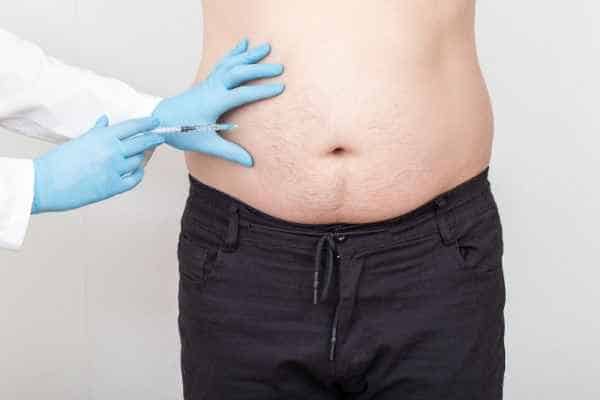
What if you already have loose skin?
This is where expectations become particularly important.
Fat-dissolving injections reduce fat. They are not a surgical skin-removal procedure, and they should not be presented as one.
If someone has a combination of localised fat and mild skin laxity, a practitioner may discuss whether a separate skin-tightening treatment could be appropriate. The suitability of any additional treatment depends on the individual and the technology being considered.
The important point is that skin tightening should not automatically be added simply because someone is having fat reduction. The two concerns should be assessed separately.
Can skin-tightening treatments help?
Some aesthetic technologies are marketed for improving the appearance of skin laxity. Results can vary depending on the technology, treatment protocol and individual circumstances.
However, results vary and no non-surgical treatment should be presented as a guaranteed way to prevent sagging.
If Lipo Sculpt Witney recommends combining treatments, the reason should be clear and based on the individual’s needs. Fat-dissolving injections do not automatically mean that skin tightening is needed, as this will depend on the person’s skin, the treatment area and the results they are hoping to achieve.
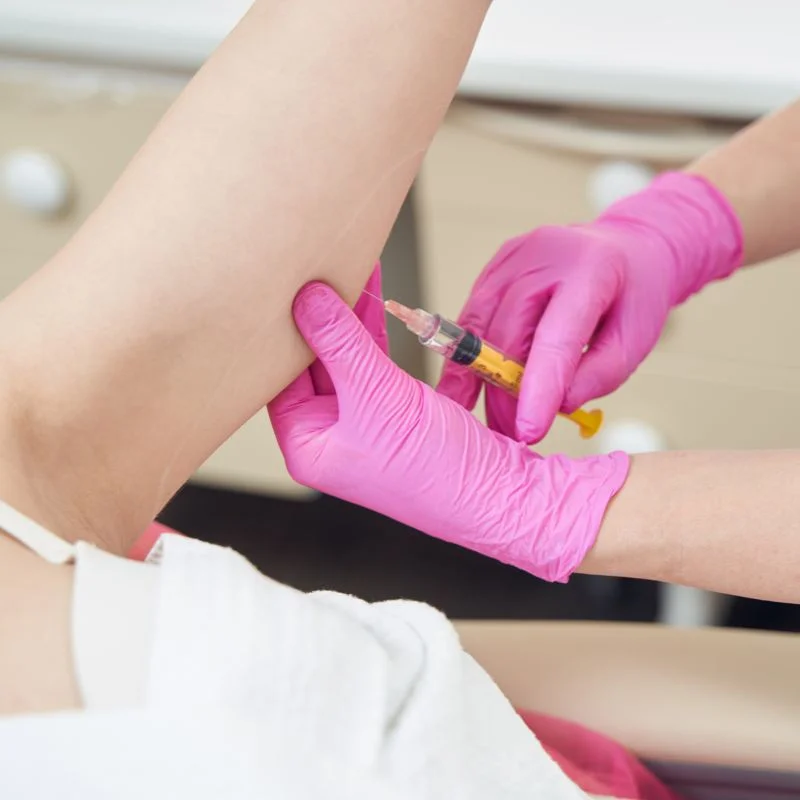
What are the limitations and possible side effects?
Fat-dissolving injections are still injections, so they should not be treated as risk-free simply because they are non-surgical.
Depending on the product and treatment area, people may experience temporary effects such as swelling, pain, bruising, redness, numbness or tenderness. Clinical research into deoxycholic acid has reported injection-site reactions including pain, swelling, bruising and numbness. [1][3]
Less common but potentially serious complications have also been reported with injectable fat-dissolving treatments. Risks can vary depending on the product, treatment area, injection technique and individual circumstances. Published reviews have reported complications including skin injury and nerve-related problems with deoxycholic acid injections. [3]
This is why product choice, practitioner training, anatomy and patient selection matter.
For this reason, treatment claims should be based on appropriate evidence rather than guarantees or exaggerated promises.
What fat-dissolving injections cannot do
A realistic treatment discussion should make these limitations clear.
Fat-dissolving injections:
- Are not a treatment for obesity or general weight loss.
- Cannot guarantee a particular amount of fat reduction.
- Cannot guarantee tighter skin.
- Do not remove large amounts of excess skin.
- May not be appropriate where loose skin is the main concern.
- May require more than one treatment depending on the product and individual assessment.
Before-and-after photographs should also be interpreted carefully. Lighting, posture, camera angle and the time between photographs can influence how results appear.
What should you ask before treatment?
If you’re thinking about having treatment, don’t be afraid to ask questions. You should understand what is being used, why it’s being recommended for you, and what you can realistically expect before you decide.
For example, you could ask:
- What product will you be using?
- What is that product actually approved or authorised for in the UK?
- Why do you think it’s suitable for this particular area?
- Am I mainly dealing with excess fat, loose skin, or a bit of both?
- What sort of result is realistic for me?
- What could go wrong, and what side effects might I notice afterwards?
- Will I need more than one treatment?
- If this isn’t suitable for me, are there other options I should consider?
NHS guidance on cosmetic procedures also recommends checking who will carry out a procedure, their training and experience, and the product being used. [5]

When should you seek medical advice?
A new lump, swelling, unexplained skin change, persistent pain or another unusual symptom should not automatically be assumed to be a cosmetic concern.
If you have an unexplained change in your body or skin, particularly one that is painful, rapidly changing or associated with other symptoms, speak to an appropriate healthcare professional before pursuing cosmetic treatment.
Frequently Asked Questions
Q: Can fat-dissolving injections Witney cause loose skin?
They do not automatically cause loose skin. The result depends on factors such as existing skin laxity, skin elasticity, treatment area and the amount of fat being reduced.
Q: Will fat-dissolving injections tighten my skin?
Their primary purpose is fat reduction, not skin tightening. If skin laxity is also present, a separate treatment may sometimes be discussed.
Q: Are fat-dissolving injections Witney suitable after weight loss?
They may be considered for some people with small areas of remaining localised fat, but significant excess skin may require a different approach.
Q: Are fat-dissolving injections Witney a weight-loss treatment?
No. They are intended for localised contouring rather than general weight loss.
Q: How do I know whether I have loose skin or stubborn fat?
This is best assessed during a consultation. A practitioner should examine the area rather than assuming that fullness is caused entirely by fat.
Q: Are fat-dissolving injections Witney risk-free?
No treatment is completely risk-free. Fat-dissolving injections may cause temporary side effects such as swelling, bruising, soreness or numbness. In some cases, complications can occur, so it’s important to understand the product being used and have treatment carried out by a suitably qualified and experienced practitioner.
Q: Can I combine fat reduction with skin tightening?
Sometimes, but it should be based on your individual assessment rather than being treated as an automatic combination.
Q: Is treatment suitable for everyone?
No. Suitability depends on your health, treatment area, skin condition, expectations and the specific product being considered.
References & Further Reading
[1] Cunha KS, Lima F, Cardoso RM. “Efficacy and safety of injectable deoxycholic acid for submental fat reduction: a systematic review and meta-analysis of randomized controlled trials.” Expert Review of Clinical Pharmacology, 2021. Supports statements about efficacy, adverse effects and skin laxity in deoxycholic-acid treatment. PubMed — systematic review and meta-analysis
[2] Deeks ED. “Deoxycholic Acid: A Review in Submental Fat Contouring.” American Journal of Clinical Dermatology, 2016. Supports the explanation of deoxycholic acid and evidence concerning submental fat and skin laxity. PubMed — clinical review
[3] Farina GA et al. “Deoxycholic acid in the submental fat reduction: A review of properties, adverse effects, and complications.” Journal of Cosmetic Dermatology, 2020. Supports adverse-effect and complication information. PubMed — review of adverse effects and complications
[4] ASA/CAP. “Cosmetic Interventions: Non-surgical procedures.” Updated 2025. Supports responsible advertising and evidence requirements for efficacy claims. ASA/CAP guidance
[5] NHS. “Choosing who will do your cosmetic procedure.” Supports advice about checking practitioner training, experience and the product used. NHS cosmetic procedure guidance
For more information, please call us on 03300101799.